The Language of the Rendezvous: A Mountain-Man Glossary
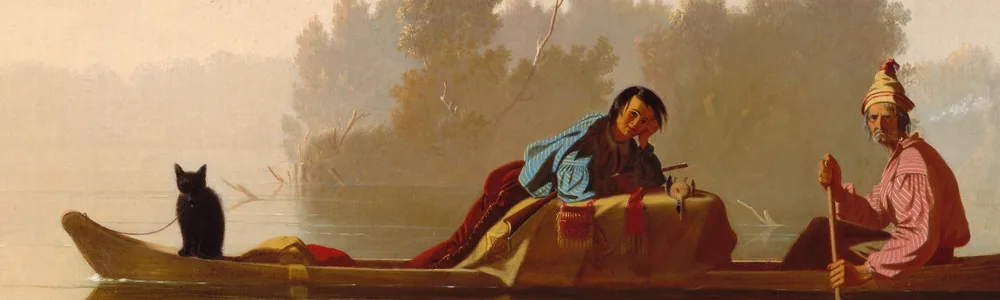
The language of the rendezvous was the working slang of the Rocky Mountain fur trade, roughly 1810 to 1840: a mix of frontier English, French, Spanish, and several Native languages, picked up by trappers who spent years away from any settlement. Words like plew (a beaver pelt), booshway (the man in charge), fofarraw (trade trinkets), and possibles (a trapper’s essential kit) survive today in the speech of buckskinners and living-history shooters. This glossary collects the most useful and best-attested of those terms.
A trapper who had spent a few winters in the mountains did not talk like a man from the eastern settlements. The speech of the fur trade was practical, vivid, and borrowed from everyone the trappers dealt with: French-Canadian voyageurs, Spanish traders out of Taos and Santa Fe, and the Plains and mountain nations whose country the trade depended on. The result was a jargon that was, as one early account put it, “as far from grammatical correctness as it is possible to imagine.”
Much of that vocabulary is still in use at modern rendezvous, where buckskinners use the old words to stay, in their phrase, “period correct.” The terms below are grouped by what they describe: the trapper and his standing, his gear and trade, the country and the hunt, and the talk of the camp. Spellings follow the phonetic forms the trappers themselves used.
The trapper and his standing
The fur trade drew a sharp line between the free trapper, who worked for himself and sold his catch to whichever outfit offered the best terms, and the company man (also mangeur de lard, French for “pork eater,” or engagé), who was under contract to a fur company and looked down on for it. A newcomer was a greenhorn, a pilgrim, or a flatlander, terms of mild contempt for someone still soft from the settlements. Once the “green was weared off” and he had survived a season, he became a mountain man in earnest; a man who had lasted a winter or two in Indian country was a hivernant or winterer.
- Booshway — from the French bourgeois; the man in charge. In the trade, the partisan who ran a brigade; at a modern rendezvous, the person in charge of the event.
- Free trapper — the independent trapper, his own master, the most prized figure of the trade.
- Voyageur — French for “traveler”; a French-Canadian canoe handler of the northern fur routes.
- Hivernant (also hivernan, winterer) — a man who had wintered over in the mountains and was no longer a greenhorn.
Gear, trade, and the beaver
The beaver pelt was the trade’s currency, and it had its own name. A plew — a single prime pelt — was the unit a trapper measured his year in, by the pack. Dictionaries trace the word to Canadian French pelu (“hairy,” from poilu); a popular alternative ties it instead to the “+” the Hudson’s Bay Company marked in its ledgers against each “made beaver.” The scent used to draw beaver to a trap was castoreum, called dab in the trade: a thick, musky extract from the animal’s own glands. A man’s most important possessions, the small kit he could not survive without, were his possibles, carried in a possibles bag alongside his shooting pouch.
- Plew — a beaver pelt, the basic unit of the trade.
- Possibles — the small, vital kit a trapper kept by his side: the difference, as the saying went, between life and death if he were set afoot without a rifle.
- Fofarraw (also foofuraw, foofaraw) — from the Spanish fanfarrón, “braggart,” mangled by English ears, with French fanfaron and frou-frou likely reinforcing it; trinkets, beads, and doodads carried as trade goods.
- Parfleche — rawhide folded and painted into containers, shields, and a kind of frontier suitcase. From the French.
- Galena pill — a lead rifle ball, cast from galena lead.
- “Up to Green River” — to drive a knife in to the hilt, where the Russell Green River Works stamped its mark near the handle.
- “Reglar Hawken” — the very best of something, after the prized St. Louis plains rifle.
The country and the hunt
The trapper’s world had its own geography of words. A hole was a secluded mountain valley — Jackson’s Hole, Brown’s Hole, and the rest. Sign was anything that told him about the country: tracks, droppings, a cold fire. The buffalo, his staple food, was the buffler, and its dried dung, the only fuel on the treeless plains, was buffler wood. To live on lean meat alone was to be “greez hungry,” hungry for fat; pork-eating was the mark of the soft company man, when a free man could have buffler or elk.
- Hole — a secluded mountain valley.
- Buffler — buffalo, the trapper’s favorite food.
- Old Ephraim (also Bar) — the grizzly bear.
- Painter — a panther or mountain lion.
- Pemmican — pounded dried meat mixed with fat and dried berries, pressed into cakes; eaten as it was or boiled into a rich soup.
- Boudin — a camp delicacy of stuffed buffalo intestine.
- Robe season — winter, when the fur was prime.
The talk of the camp
The most enduring fur-trade words are the ones for good times and hard ones. Shinin’ times were the good days: prime trapping, a full rendezvous, something to remember. To say a thing “shines” was to say it was first-rate (“thet there flinter of yourn shines, it truly does”). A man who had died had “gone under.” And the great gathering itself was the ronnyvoo — the trapper’s pronunciation of rendezvous, the annual summer meeting held every year from 1825 to 1840, save for 1831 when the supply wagons failed to arrive on time.
- Ronnyvoo (also rondyvoo) — rendezvous, the annual summer trade gathering.
- Shinin’ times — a good, memorable stretch; prime days.
- “That shines” — that is good, suitable, or special.
- Gone under — died, or was killed.
- Waugh! (also Waah!) — an exclamation of surprise or admiration, said to sound like a grunt.
- Old hoss — a friendly term for a fellow trapper (“Bill, you ole hoss, I hain’t seed you since last ronnyvoo!”).
- Trapper’s oath — a pledge of truth taken by placing the rifle muzzle in one’s mouth.
- “Year it rained fire” — 1833, after the great Leonid meteor storm on the night of November 12–13 that year, seen across North America.
This vocabulary is drawn from the spoken record of the American fur trade and from the living-history community that keeps it in use. The phonetic spellings — buffler, ronnyvoo, fofarraw — are the trade’s own, recorded as the trappers said them rather than corrected to standard English. A handful of period terms that were slurs against Native peoples have been left out; they belong to the historical record but add nothing to an understanding of the language itself.
Common questions
What is a “plew”?
A plew is a single prime beaver pelt, the basic unit of value in the Rocky Mountain fur trade. Dictionaries trace the word to Canadian French pelu (“hairy,” from poilu); a well-known alternative ties it instead to the “+” the Hudson’s Bay Company marked against each “made beaver” in its ledgers. Either way, a trapper’s year was measured in packs of plews, and at rendezvous those packs became credit against the next season’s supplies.
What does “booshway” mean?
Booshway is the trapper’s rendering of the French bourgeois, and it means the man in charge. In the fur trade it was the partisan who led a trapping brigade. The word survived the trade: at a modern buckskinner rendezvous, the booshway is the person who runs the event, sites the camp, and settles disputes.
Why is the spelling so strange — “buffler,” “ronnyvoo,” “fofarraw”?
Because the words are written the way the trappers said them, not the way a dictionary would. Fur-trade speech was spoken, not written, and it ran together English, French, Spanish, and Native words picked up across years in the field. The phonetic spellings preserve the sound of the original: buffler for buffalo, ronnyvoo for rendezvous, fofarraw from the Spanish fanfarrón. Correcting them to standard English would lose the point of the record.
Do people still use these words?
Yes. The living-history hobbyists who recreate the fur-trade era, known as buckskinners, use the old vocabulary at modern rendezvous to stay “period correct.” A greeting like “Hey, ole hoss, I see yer still keepin’ yer hair!” is a deliberate nod to the trade’s own speech. The terms also turn up throughout the written history of the period, so a reader of fur-trade journals and fiction meets them constantly.